Bluetti Power Stations: The Ultimate Guide to Off-Grid Power
Bluetti Power Stations – Imagine having a silent, fume-free power outlet you can take absolutely anywhere—from the depths of a forest to your basement during a blackout. That’s the promise of a portable power station, and Bluetti is one of the most recognized names delivering on it.
A Bluetti power station is essentially a giant, sophisticated battery in a box. It stores electrical energy (in watt-hours, or Wh) that you can use to power everything from your smartphone to your refrigerator. Unlike noisy gas generators, these stations are quiet, clean, and safe to use indoors. They are the cornerstone of modern off-grid power, emergency preparedness, and mobile living.

Are Bluetti Power Stations Any Good? An Honest, Real-World Breakdown
The Short Answer – Yes, Bluetti power stations are very good. They are a top-tier brand known for their high-capacity, expandable systems that use long-lasting LiFePO4 batteries. They excel for users needing serious power for off-grid living, emergency backup, or powering high-wattage appliances.
While brands like EcoFlow charge faster and Jackery is more portable, Bluetti often wins on raw battery capacity, lifespan, and modular expansion. Their workhorse AC200P model can power a standard fridge for about 20 hours on a single charge, and with proper care, the station itself can last for a decade or more.
Bluetti Unboxed: A Brand Built on Power and Durability
So, who is behind these power boxes? Bluetti is a green energy company that was founded in 2009 in Shenzhen, China. Shenzhen is a global tech hub, and Bluetti has leveraged that engineering expertise to become a major player in the portable and home energy storage market. They now operate subsidiaries in the United States, the UK, Japan, and Germany, serving a worldwide customer base.
Bluetti Stores
| USA | Australia | Europe | United Kingdom |
|---|---|---|---|
 |  |  |  |
| Visit Store | Visit Store | Visit Store | Visit Store |
| Italy | Germany | France | Canada |
 |  |  |  |
| Visit Store | Visit Store | Visit Store | Visit Store |
The company has built its reputation on a few core principles:
- LiFePO4 Battery Focus: Bluetti was an early adopter of Lithium Iron Phosphate (LiFePO4 or LFP) battery chemistry. This technology is safer, more stable, and lasts for thousands of charge cycles compared to older battery types.
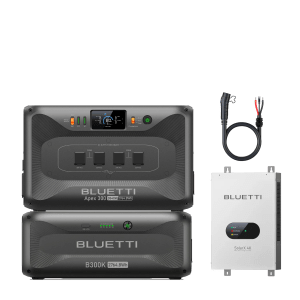
- High Capacity & Expandability: While they make small models, Bluetti is famous for its “powerhouse” units. Many of their stations, like the Apex 300, AC200MAX, or AC300, can connect to external battery packs, letting you double, triple, or even further increase your energy storage.
- Versatility: A typical Bluetti station can be recharged in multiple ways: from a wall outlet, a car, a generator, and most importantly, from solar panels, making them true “solar generators”.
The Heavyweight Showdown: Bluetti vs. EcoFlow vs. Jackery vs. Anker
You’re not just buying a battery; you’re choosing a tech ecosystem. Here’s how the major players stack up.


1. Bluetti vs. EcoFlow: The Capacity vs. Speed Rivalry
This is the most common head-to-head. EcoFlow is the tech-savvy innovator, often leading in charging speed and smart features. Their X-Stream technology allows some models to recharge from 0-80% in under an hour. Their app experience is also generally considered more polished.
Bluetti, however, is the long-haul workhorse. It often wins on battery lifespan (more cycles), sheer capacity, and modular expansion options for a lower cost per additional watt-hour. If your priority is keeping the lights on for days during an outage or building a large off-grid system, Bluetti’s approach is compelling.
Who Wins? Choose EcoFlow (like the River 2 Pro) if you need power fast and love smart controls. Choose Bluetti (like the AC200P) for maximum capacity, budget-friendly expansion, and long-term durability.
2. Bluetti vs. Jackery: The Powerhouse vs. The Pioneer
Jackery is the lightweight legend of the portable power world. They pioneered the consumer-friendly “solar generator” and are known for incredible simplicity, reliability, and portability. Their units are often the lightest in their class.
Bluetti, again, brings more muscle to the fight. While Jackery has moved to LiFePO4 in newer models, Bluetti has been using it longer and often offers higher cycle counts. Bluetti stations typically have higher solar input limits and more output ports for running many devices at once.
Who Wins? Choose Jackery for straightforward, grab-and-go camping or tailgating where ease of use is key. Choose Bluetti when you need to power more demanding appliances or want the option to expand your system later.


3. Bluetti vs. Anker: The Specialist vs. The Gadget Giant
Anker is a titan in charging tech, and its SOLIX power station line brings that know-how to larger-scale energy. Their high-end models, like the SOLIX F3800 Plus, are technological marvels with massive output (6000W) designed for seamless home backup.
Bluetti competes by offering similar professional-grade capacity and features, often at a more accessible price point. Anker’s strength is in ultra-refined integration, while Bluetti’s is in providing proven, durable power for dedicated off-grid users.
Who Wins? For a premium, all-in-one home backup solution with cutting-edge tech, consider Anker. For robust, expandable power for off-grid cabins, RVs, or serious emergency prep, Bluetti often provides better value.


Here’s a quick comparison to help you visualize the differences:
| Features | Bluetti | EcoFlow | Jackery | Anker |
|---|---|---|---|---|
| Brand Persona | The Long-Haul Workhorse | The Speedy Innovator | The Simple & Portable Pioneer | The Premium Tech Integrator |
| Key Strength | High capacity, LiFePO4 lifespan, modular expansion | Ultra-fast charging, smart app & features | Lightweight, reliable, user-friendly | High-power output, refined home backup |
| Typical Best For | Off-grid living, extended outages, RVs | Fast turnaround, tech lovers, hybrid home use | Camping, beginners, small backup needs | Whole-home backup, premium integration |
| Battery Focus | High cycle count (3,500-6,000+ cycles) | Fast charge/discharge capability | User-friendly, dependable performance | High efficiency & smart management |
| Sample Model | AC200P | River 2 Pro | Explorer 1000 | SOLIX F3800 Plus |

The Heart of the Matter: Bluetti AC200P & AC200L Deep Dive
Many of your questions center on the 2000Wh-class models. Let’s break them down.
1. How Long Does the AC200P Battery Really Last?
This is two questions in one: runtime per charge and total product lifespan.
a. Runtime Per Charge: The AC200P has a 2,000Wh (watt-hour) battery. To find out how long it will take to run something, use this simple math:
Runtime (hours) = 2,000Wh / Your Appliance’s Wattage
- Can it power a fridge? Yes, easily. A modern 70W car fridge would run for about 20-28 hours. A standard home fridge (150-400W, cycling on/off) could be powered for a day or more during an outage.
- What about a 2000mAh phone battery? This is a trick question! mAh (milliamp-hours) is a measure for small batteries. The AC200P’s 2,000Wh capacity is enormous in comparison—it could charge a 3,000mAh smartphone over 50 times.
b. Total Lifespan (Years/Cycles): This is where Bluetti shines. The AC200P uses a LiFePO4 battery rated for 3,500+ charge cycles to 80% capacity. If you used and recharged it once every day, that’s nearly 10 years before you’d see meaningful degradation.
2. Charging the Beast: Solar and Grid Timelines
- Wall Outlet (500W adapter): ~4.5-5 hours to full.
- Solar (700W max input): ~3.5-4 hours with ideal, strong sunshine.
- Fastest Method (Dual Input): Using the AC adapter and solar panels simultaneously (1200W max), you can achieve a full charge in about 2.2-2.7 hours.
How long does it take for a 400W solar panel to charge it? With a single 400W panel in perfect sun, it would take roughly 5-6 hours (2000Wh / 400W = 5h, plus efficiency losses).
3. Is a 2000Wh (200Ah-ish) Battery Enough for a Home?
It’s an excellent backup for essentials, but not the whole house. A 2000Wh station is perfect for a critical circuit backup: keeping your fridge cold, routers and phones running, a few lights on, and perhaps a fan or medical device (like a CPAP) for 24-48 hours. It is not meant to power air conditioners, electric heaters, or clothes dryers for extended periods. For whole-home backup, you’d look at Bluetti’s larger, expandable home systems like the AC300 or Apex series.
4. The Newer Sibling: The AC200L
The AC200L is a refreshed version of the classic AC200P. Key upgrades include a more powerful 2,400W inverter (great for starting motors), faster 1,200W solar input, and a built-in charger (no bulky power brick). Real-world tests show it effortlessly handles heavy loads like a 1,800W mini-oven. It also features Wi-Fi connectivity for easier remote monitoring via the app.

Maximizing Your Investment: Lifespan and Maintenance
A Bluetti is a long-term investment. Here’s how to protect it.
1. How Long Will My Bluetti Power Station Last?
As mentioned, the battery is designed to last 3,500 cycles or about 10 years with daily use. The overall unit, with proper care, should last just as long. The “80-20 rule” for lithium batteries is a good guideline: for the longest life, try to avoid regularly draining it to 0% or charging to 100%. Keeping it between 20% and 80% charge for daily use is ideal, but occasional full cycles are fine.
2. Is It Okay to Leave Bluetti Plugged In All the Time?
For long-term storage, no. If you’re storing it for months (e.g., between camping seasons), charge it to about 60-80% and store it in a cool, dry place. Re-check and top up the charge every 3-6 months.
If you’re using it as a frequent backup (like for weekly outages), it’s designed to be left plugged in and will manage itself. However, for optimal battery longevity, unplugging it once it’s fully charged is a good practice.
3. Essential Maintenance Tips
- Keep It Clean: Wipe the case with a dry cloth. Ensure vents are clear of dust to prevent overheating.
- Avoid Extreme Temperatures: Don’t use or store it in direct blazing sun or freezing cold. The ideal operating range is 32-104°F (0-40°C).
- Use Compatible Chargers: Stick with Bluetti solar panels or ensure third-party panels meet the voltage (VOC) specifications.
- Don’t Let It Sit Dead: If you drain the battery, recharge it as soon as possible.
Conclusion: Is Bluetti Right for You?
Bluetti Power Stations – Bluetti has firmly established itself as a leader in the portable power space by focusing on what matters most for serious users: durable battery technology, massive and expandable capacity, and versatile charging.
Choose a Bluetti power station if:
- Your top priorities are long battery lifespan and value over time.
- You need to power high-wattage appliances (microwaves, power tools, kettles) or want to expand your system later with extra batteries.
- You’re preparing for multi-day power outages or living an off-grid/RV lifestyle.
Look at competitors like EcoFlow or Jackery if:
- Ultra-fast charging is your #1 concern.
- You need something extremely lightweight for backpacking or short trips.
- You prefer the simplest, most beginner-friendly interface.
Ultimately, the “best” portable power station is the one that disappears into the background, providing reliable, quiet power exactly when and where you need it. For millions of users worldwide, that station is a Bluetti.
Bluetti Stores
| USA | Australia | Europe | United Kingdom |
|---|---|---|---|
| | | |
| Visit Store | Visit Store | Visit Store | Visit Store |
| Italy | Germany | France | Canada |
| | | |
| Visit Store | Visit Store | Visit Store | Visit Store |
FAQs About Bluetti Power Stations
- Are Bluetti power stations and solar panels made in China, and does that affect quality?
Yes, Bluetti is a Chinese brand founded in Shenzhen. However, modern Chinese manufacturing, especially in the tech hub of Shenzhen, is world-class. Bluetti’s use of high-quality LiFePO4 cells and adherence to strict international certifications (like UL standards) means the country of origin is not an indicator of poor quality but rather of advanced technical production capability. - What is the real-world difference between Watt-hours (Wh) and Amp-hours (Ah)?
Think of it like water: Watt-hours (Wh) is the total volume of water in the tank (total energy). Amp-hours (Ah) is the flow rate of the hose at a specific pressure (Voltage). To compare, you need voltage. For a 12V system, a 200Ah battery holds about 2,400Wh (12V x 200Ah). Bluetti’s AC200P has a 2,000Wh battery at a higher voltage, so its “Ah” rating is different. Always use Watt-hours to compare power stations and calculate runtime. - Can I use any solar panel with my Bluetti, or do I need theirs?
You can use quality third-party solar panels, but you must ensure they are compatible. Check that the panel’s Open Circuit Voltage (VOC) falls within your Bluetti’s stated solar input range (e.g., 35-150V for the AC200P). You’ll also need the correct connector (typically MC4). Using Bluetti’s own panels guarantees compatibility and optimized performance. - For a weekend camping trip, which Bluetti model should I consider instead of the large AC200P?
For typical weekend camping (charging phones, drones, lights, running a small fridge), a mid-size model like the AC70 (768Wh) or AC180 (1,152Wh) is more portable and sufficient. They offer plenty of power, are lighter to carry, and still feature fast charging and LiFePO4 batteries. - What happens to my Bluetti after it exceeds its rated battery cycles?
It doesn’t suddenly stop working. The rating (e.g., 3,500 cycles to 80%) means that after that many full charge/discharge cycles, the battery will likely hold about 80% of its original capacity. Your 2,000Wh AC200P might effectively become a 1,600Wh station. It will still be very useful, just with slightly reduced runtime.